
You notice a tooth feels loose, maybe after biting down on something hard, maybe after a hit to the mouth, maybe during a cleaning when your local dentist in Tallahassee, FL mentions mobility. That moment can make your stomach drop. A loose tooth sounds simple, but it rarely is. The way a tooth moves during a mobility exam tells your dentist far more than whether it is loose. It helps show what structures are injured, whether the problem is from trauma, gum support loss, bite forces, or infection, and how urgent treatment may be.
That is why the direction of tooth movement during a mobility exam matters. A tooth that shifts side to side suggests one kind of support problem. A tooth that sinks inward or lifts in the socket points to something more serious. The movement pattern helps a general dentist decide whether the issue needs monitoring, splinting, bite adjustment, periodontal care, or fast referral.
Tooth mobility direction reveals which supporting tissues are failing
Teeth are not fused solidly to bone. They sit in a ligament system that allows tiny, healthy movement under pressure. During a mobility exam, a general dentist checks how far the tooth moves and which way it moves. That second part often changes the whole picture.
Horizontal movement, meaning side to side or front to back, often points to loss or inflammation in the periodontal ligament and surrounding bone. This can happen with gum disease, long term grinding, or a tooth that has taken repeated bite trauma. It may feel minor to you at first. You chew on one side, avoid crunchy foods, and hope it settles down. If the cause is active periodontal breakdown, waiting can mean more bone loss and less support.
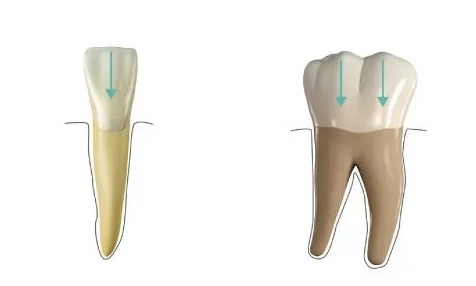
Vertical movement is more concerning. If a tooth moves up and down in the socket, or feels depressible when pressure is applied, the attachment system may be badly damaged. This can happen after trauma, in advanced periodontal disease, or with root fracture. In a mobility exam, that direction changes the urgency because vertical mobility often carries a worse outlook than simple horizontal looseness.
Research on traumatic dental injuries shows that displacement patterns and mobility findings help guide diagnosis and treatment choices. The AAPD guidance on fracture and luxation injuries outlines how movement and displacement can signal injuries that need stabilization and close follow up.
Loose tooth movement patterns change the diagnosis
A loose tooth is not one diagnosis. It is a sign. The direction of movement helps narrow down the reason behind it.
If a tooth moves mostly sideways and the gums are inflamed, your dentist may be thinking about periodontal disease. If the same tooth is tender to biting and seems to intrude or extrude slightly, trauma or occlusal overload rises higher on the list. If there is sudden mobility after an accident, a luxation injury becomes a concern. If the tooth moves in a way that seems isolated from the teeth around it, a root fracture may need to be ruled out.
This is where people often get stuck. You feel a loose tooth and assume the tooth itself is the whole problem. Sometimes the real issue is the ligament. Sometimes it is the bone. Sometimes the bite is forcing that tooth to absorb more load than it can handle. A tooth mobility assessment is not just checking looseness. It is checking the pattern behind the looseness.
Population level oral health data also supports how common periodontal conditions and tooth support problems are across adults. The NIDCR Oral Health in America report shows how widespread gum disease and unmet oral health needs remain, which helps explain why mobility findings can signal larger support issues rather than an isolated annoyance.
Why the direction of tooth movement matters during a mobility exam in daily practice
In real life, this affects treatment choices fast. A tooth with mild horizontal mobility from inflammation may improve after deep cleaning, home care changes, and reduced bite stress. A tooth with vertical mobility may need splinting, imaging, endodontic evaluation, or a guarded discussion about prognosis.
You can see how this plays out in common situations. Someone grinds at night and one front tooth starts feeling loose. If the movement is mostly horizontal and the bite is heavy, a night guard and bite adjustment may protect it before support worsens. Another person takes an elbow to the mouth during a game, and the tooth feels taller, sore, and mobile. The movement direction raises concern for luxation, not just irritation. Those are not interchangeable problems, and they should not be treated like they are.
Clinical reviews on tooth mobility also describe how mobility direction, grading, periodontal support, and trauma findings work together in diagnosis and prognosis. This peer reviewed overview of tooth mobility and its clinical significance reflects that broader approach.
Mobility direction and likely concerns compared
| Movement Pattern | Common Concern | What It May Mean | Typical Next Step |
|---|---|---|---|
| Minimal physiologic movement | Normal support | Healthy periodontal ligament allows slight movement | Routine monitoring |
| Horizontal side to side movement | Periodontal inflammation, bone loss, bite trauma | Support tissues may be weakened but not fully unstable vertically | Periodontal exam, imaging, bite review |
| Pronounced horizontal movement | Advanced support loss | Reduced bone and ligament support, higher risk during chewing | Stabilization plan and prognosis discussion |
| Vertical or depressible movement | Severe attachment loss, luxation, root fracture | More serious instability and poorer outlook | Urgent evaluation, imaging, possible splinting or referral |
What you can do right away if a tooth feels loose
Pay attention to how and when it moves. Notice whether the tooth feels loose only when chewing, only when you push on it with your tongue, or whether it feels taller, sore, or out of place. Those details help your general dentist connect the movement pattern to the cause.
Avoid testing the tooth yourself. People do this without thinking. You wiggle it with a finger or keep tapping it with your tongue all day. That repeated force can aggravate an already injured ligament. Eat softer foods, chew on the other side if needed, and leave the exam to a professional.
Schedule a dental exam quickly. This matters most after trauma, sudden onset mobility, pain on biting, or any feeling that the tooth shifted position. Direction of tooth movement in a dental mobility exam can change the diagnosis and the timeline for treatment, so waiting to “see if it tightens back up” is not always safe.
The right treatment starts with the right movement pattern
A loose tooth can feel alarming, but the answer is not guesswork. The way the tooth moves during an exam gives your dentist a map. It points toward inflammation, support loss, bite trauma, injury, or fracture, and that is what makes treatment more precise. Tooth movement direction in a mobility exam is not a small technical detail. It is often the clue that separates watchful monitoring from urgent care.
If a tooth feels loose, sore, or out of position, book a visit with a general dentist as soon as you can. Early evaluation gives you the best chance to protect the tooth and the tissues holding it in place.