
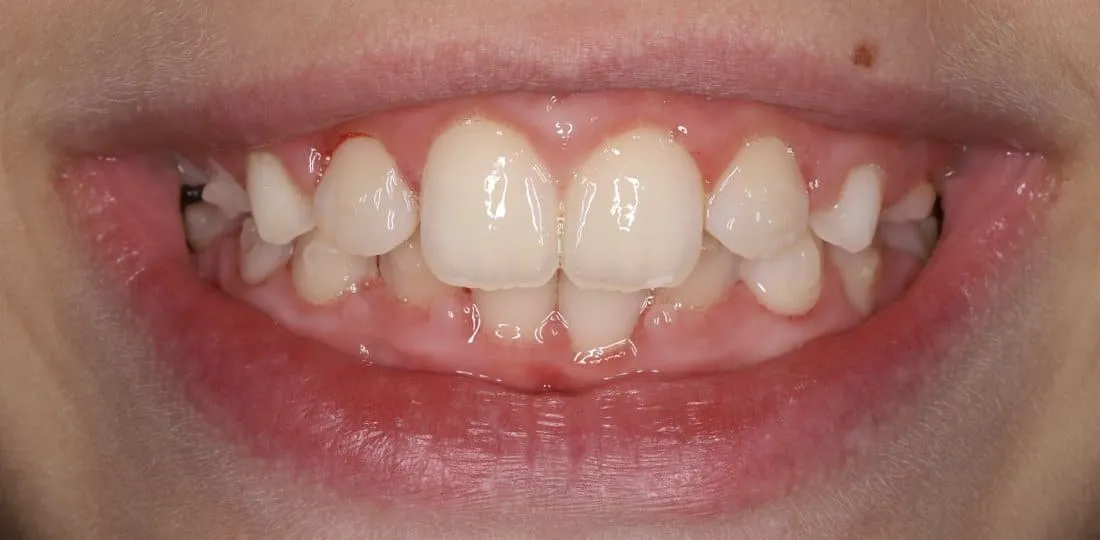
A bite is about more than how a smile looks in photos. It affects the way upper and lower teeth meet during chewing, speaking, and closing the mouth. For people considering correcting an overbite with aligners, the first question is not simply whether trays can move teeth. It is whether the concern comes mainly from tooth position, jaw structure, or a combination of both.
Not every bite difference causes a health problem, and a perfectly uniform bite is not necessary for every person. Still, discomfort, uneven wear, frequent cheek biting, or difficulty chewing can be signs that the way the teeth meet deserves a closer look. Early evaluation can help distinguish a minor variation from a developing functional concern.
In a balanced bite, the teeth should come together in a way that supports comfortable chewing without concentrating too much force on a small number of teeth. When contact is uneven, certain teeth may receive more pressure than others. Over time, that can contribute to flattened edges, chips, sensitivity, or frustration with eating particular foods.
Bite changes can also happen gradually. A tooth may shift after tooth loss, restorations may alter contact points, or grinding can wear enamel and change the shape of teeth. A bite that suddenly feels different, especially after dental work or an injury, is worth mentioning at a dental appointment.
For families seeking a professional assessment and routine care, North Orange Family Dentistry can help patients discuss bite comfort, tooth position, oral health, and potential next steps in a single visit. A thorough evaluation can help determine whether monitoring, restorative care, or an orthodontic consultation may be appropriate for the patient’s needs.
Common Types of Bite Problems
The general term for a misaligned bite is malocclusion. A helpful overview of malocclusion describes several common patterns that dental professionals evaluate:
- Overbite: The upper front teeth overlap the lower front teeth too far vertically.
- Overjet: The upper front teeth extend too far forward in front of the lower teeth.
- Underbite: The lower front teeth sit in front of the upper front teeth when the mouth closes.
- Open bite: Some upper and lower teeth do not touch when the mouth is closed.
- Crossbite: One or more upper teeth close inside the lower teeth rather than outside them.
Signs That a Bite May Need a Closer Look
Symptoms cannot diagnose a specific bite condition on their own, but they can provide useful information during an exam. Consider scheduling a discussion if you notice:
- Jaw soreness, facial tension, or morning tightness.
- Difficulty biting into foods such as sandwiches, fruit, or pizza.
- Chipped, flattened, sensitive, or increasingly worn teeth.
- Repeated biting of the cheeks, lips, or tongue.
- Speech changes that seem related to tooth position.
- Uneven contact when closing the teeth together.
- Difficulty brushing and flossing around crowded or rotated teeth.
- A noticeable bite change after tooth loss, injury, or dental treatment.
What Can Cause a Misaligned Bite?
Tooth Position
Crowding, spacing, tilting, and rotation can all change the way teeth fit together. When a tooth is lost, nearby teeth may drift into the open space, which can affect contact points and make cleaning more difficult. Impacted teeth and poorly fitting restorations may also influence bite alignment.
Jaw Growth and Structure
Sometimes the primary issue is the relationship between the upper and lower jaws rather than the angle of individual teeth. Differences in jaw size or position can contribute to underbites, prominent overjets, and deep bites. Growth patterns are especially relevant for children and teens because the jaws are still developing.
Habits and Daily Forces
Long-term thumb sucking, pacifier use beyond early childhood, tongue thrusting, mouth breathing, clenching, and grinding may influence tooth position or wear patterns. These concerns should be evaluated individually. Trying to self-correct a bite with unsupervised devices or exercises may delay appropriate care.
How a Dental Professional Checks the Bite
A bite evaluation typically begins with questions about discomfort, chewing, past orthodontic care, dental work, and habits such as grinding. The clinician then examines tooth position, gum health, enamel wear, jaw movement, and how the teeth contact during closing and side-to-side movements.
Photographs, X-rays, digital scans, or dental models may be recommended when they clarify what is happening beneath the surface or help document changes over time. The goal is not to force every mouth into the same pattern. It is to identify the cause of a concern and create a realistic plan.
Treatment Paths in 2026
Monitoring
Mild bite differences may simply need regular observation when they do not interfere with comfort, oral hygiene, function, or tooth health. Monitoring can be especially useful when a child is still losing baby teeth or when a change is not progressing.
Braces and Clear Aligners
Braces provide detailed control for many types of tooth movement and may be recommended for complex alignment needs. Clear aligners are removable trays that may be appropriate for selected cases, particularly when tooth position is the primary concern. Both approaches require a treatment plan, periodic progress checks, and retention afterward.
Growth Guidance and Combined Care
For younger patients, timing may allow orthodontic appliances to guide growth or create space before comprehensive alignment. Significant jaw discrepancies may require coordinated orthodontic treatment and corrective jaw surgery. That option is limited to specific cases and is considered only after careful evaluation.
What Research Adds to the Conversation
Digital scans and treatment simulations can help clinicians visualize tooth movement and compare progress over time, but they are planning tools rather than guarantees. Research also continues to explore aligner treatment in patients with unusual clinical needs. For example, an NIDCR clinical trial involving patients with brittle teeth is examining whether clear aligners can improve dental function for people with osteogenesis imperfecta and posterior open bites.
Questions to Ask Before Choosing Treatment
- What bite pattern is present, and what is causing it?
- Is the concern related to teeth, jaws, or both?
- What could happen if the issue is monitored instead of treated now?
- Which options address both function and appearance?
- How often will progress be checked?
- Will retainers be needed, and how long should they be worn?
- How could grinding, oral hygiene, or inconsistent appliance wear affect the outcome?
Conclusion
A bite concern is not always urgent, and it does not always require orthodontic treatment. However, changes in chewing, tooth wear, jaw comfort, speech, or cleaning should not be ignored. A thorough evaluation can show whether the best next step is observation, orthodontic care, restorative treatment, or a combined approach. Accurate diagnosis and realistic expectations remain the foundation of successful bite care.