





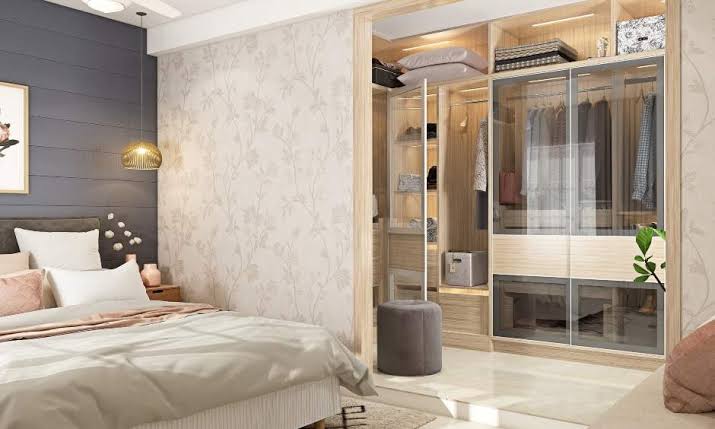
You’ve found the wardrobe of your dreams. It has clever pull-outs, a soft glow inside, and doors that glide like butter. Then the quote lands, and suddenly you’re staring at a number that doesn’t quite add up. What exactly are you paying for? And could you get the same look for less?
Wardrobe pricing can feel like a black box. Two quotes for what looks like the same unit can differ by thousands, and it’s rarely obvious why. Let’s open that box and see what’s really inside, so you can spend with confidence rather than crossed fingers.
What Actually Drives Wardrobe Costs
A wardrobe isn’t one thing. It’s a bundle of decisions, and each one nudges the price up or down.
- Materials come first. The core board, whether it’s plywood, MDF, or particle board, sets your baseline. Plywood costs more but handles humidity and weight better over the years. The finish on top, be it laminate, acrylic, or lacquer, adds another layer of cost and character.
- Hardware is the quiet spender. Hinges, channels, and handles seem minor until you multiply them across every drawer and door. Good-quality soft-close mechanisms cost more upfront, but they’re the difference between a wardrobe that feels solid in year five and one that starts sagging in year two.
- Internal fittings add up fast. Pull-out trays, tie racks, trouser holders, built-in mirrors, and drawer organizers all sit on top of the basic structure. They’re wonderful to have, but each one is a line item.
- Size and layout matter too. A floor-to-ceiling wardrobe uses more material than a standard one. Corners, angles, and custom shapes take extra labor and cutting, which shows up in your final figure.
Why Stylish Wardrobes Are Worth the Investment
It’s tempting to see a wardrobe as pure storage, but the right one does far more. Stylish wardrobes anchor a bedroom, set its mood, and make the whole space feel considered rather than thrown together.
Think about it. Your wardrobe is often the largest single surface in the room. When it looks good, everything around it lifts. A muted matte finish can bring calm to a busy space, while a mirrored front can double the sense of light and room.
There’s a practical payoff too. Stylish wardrobes designed with real thought tend to organize better, because designers who care about looks usually care about function as well. And if you ever sell or rent your home, a well-designed wardrobe reads as a genuine feature, not just furniture.
The key is not to confuse “stylish” with “expensive.” Some of the most striking stylish wardrobes achieve their effect through simple, clean design rather than costly extras. A restrained palette and good proportions often beat a wardrobe crammed with flashy details.
How Sliding Door Wardrobe Design Affects Price and Function
Doors are a bigger decision than most people realize. Hinged doors are the traditional choice and usually the cheaper one. But sliding doors change both how a wardrobe works and what it costs.
A good sliding door wardrobe design saves floor space, since the doors never swing out into the room. That makes it a smart pick for compact bedrooms or spaces where a bed sits close to the wardrobe. You also get large, uninterrupted door surfaces, which are perfect for mirrors or bold finishes.
The trade-off is cost and access. Sliding systems rely on quality tracks and rollers, and cutting corners here leads to doors that stick, rattle, or jump their rails. That hardware pushes the price above a basic hinged unit. You also can only ever see half the wardrobe at once, since one door always sits behind another.
Here’s a real-world example. A couple in a small city apartment chose a sliding door wardrobe design with mirrored fronts. It cost more than the hinged version they first considered, but it freed up nearly a meter of usable floor space and made the whole room feel larger. For them, the extra spend earned its place.
How to Read and Compare a Per Sq Ft Quote
Most wardrobe quotes arrive as a wardrobe cost per sq ft figure. It sounds tidy, but that single number hides a lot of variation.
What it usually covers is the basic structure: the carcass, the shutters or sliding panels, standard hardware, and installation. That’s the foundation, and it’s a fair way to compare suppliers on a like-for-like basis.
What it often leaves out is where budgets quietly stretch. Premium finishes, soft-close mechanisms on every drawer, internal organizers, lighting, and mirrored fronts frequently sit outside the headline number. Two suppliers can offer an identical wardrobe cost per sq ft and deliver completely different wardrobes once you tally the extras.
So don’t compare prices alone. Compare specifications. Ask precisely what’s included, what counts as an upgrade, what board and hardware are being used, and what warranty comes with it all. A slightly higher quote with better materials and everything included is often the cheaper choice in the long run.
Where to Splurge and Where to Save
Spending well isn’t about spending less across the board. It’s about putting your money where it does the most work.
- Splurge on the things you touch daily. Hinges, sliding tracks, and drawer runners take constant use. Quality here pays you back every single morning and saves you repair costs down the line.
- Splurge on the core board if humidity is a concern. In damp climates or bathrooms-adjacent rooms, a sturdier core protects your investment for years.
- Save on decorative extras you can add later. Fancy handles, extra racks, and specialized organizers can often be fitted after the fact, once your budget recovers.
- Save by keeping the shape simple. Straight runs cost less than corner units and custom angles. A clean, rectangular design is both cheaper and often more timeless.
Picture two friends who set out with the same budget. One poured everything into a glossy finish and premium handles but chose the cheapest tracks available. Within two years, her doors were dragging. The other spent on solid hardware and a simpler finish. Her wardrobe still glides shut without a sound. Same money, very different results.
Conclusion
A wardrobe is a purchase you live with for a decade or more, so it pays to understand what you’re actually buying. Look past the finish and study the structure. Weigh up sliding versus hinged with your room in mind. Read every quote line by line rather than trusting a single number.
Do that, and you’ll land a wardrobe that looks the part, works hard, and holds up beautifully over the years, without paying for anything you didn’t need.


