
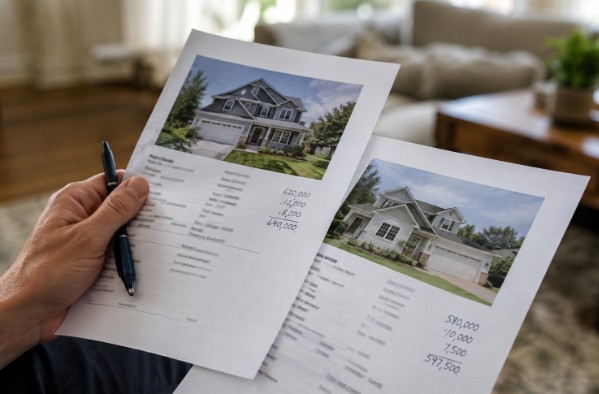
Choosing a place to live in St. Louis is about more than finding an appealing kitchen or a manageable asking price. The right neighborhood should support your commute, budget, routines, and plans for the years ahead.
Buyers searching homes for sale in St. Louis MO can use Bethany DeMaggio’s searchable local listings to explore properties by address, city, or neighborhood. As a St. Louis-area real estate resource with listings spanning communities such as Kirkwood, Webster Groves, Crestwood, and Sunset Hills, Bethany DeMaggio helps buyers begin comparing homes with the surrounding location in mind.
Table of Contents
- Start With Your Daily Life
- Compare Home Types and Lot Sizes
- Calculate the Full Cost of Living
- Study Commutes and Transportation
- Review Local Services and Amenities
- Inspect Older Homes With Care
- Visit More Than Once
- Build a Neighborhood Scorecard
Start With Your Daily Life
Before comparing listings, write down the places your household visits in a normal week. Include work, school, child care, grocery stores, medical appointments, parks, fitness classes, family, and regular errands. This exercise brings the search back to practical questions: Do you want a shorter drive, a walkable block, a garage, a larger yard, or quick access to recreation?
A buyer who works downtown may prioritize a predictable commute. A remote worker may place greater value on a quiet street, a workable home office, and nearby places to get outside. Consider likely changes, too. A home that fits today should still make sense if work arrangements, household size, or mobility needs shift.
Compare Home Types and Lot Sizes
St. Louis buyers may encounter brick-city homes, ranch houses, historic properties, condominiums, townhomes, and newer construction throughout the broader region. Do not let total square footage make the decision on its own. Look at how the space works in daily life.
Questions to ask during a tour
- Is there enough storage, parking, basement space, and usable outdoor area?
- Does the floor plan work for entertaining, working from home, or aging in place?
- Who handles exterior maintenance, and do association rules or fees apply?
- What do the roof, windows, plumbing, electrical system, and heating and cooling equipment suggest about future upkeep?
Two homes with similar prices can carry very different responsibilities. A smaller, well-maintained property may leave more room in the budget than a larger home that needs substantial updates.
Calculate the Full Cost of Living
Build a monthly estimate for every serious contender. Start with the mortgage payment, then add property taxes, homeowners insurance, utilities, association fees when applicable, routine maintenance, and transportation costs. If a property may need flood or other specialty insurance, ask for quotes early rather than waiting until the final stages of the purchase.
For example, a lower-priced home farther from work may cost more over time if it requires immediate repairs, higher insurance premiums, or a longer daily drive. Compare the whole ownership picture, including the cash you may need in the first year for repairs and move-in projects.
Study Commutes and Transportation
Maps are useful, but a route that appears short can feel very different at rush hour. Drive the trip to work, school, or frequent appointments on weekday mornings and evenings, then check it again on weekends. Note traffic patterns, highway access, street parking, and the ease of entering or leaving the block.
If public transportation matters to your household, use Metro Transit trip-planning tools and system schedules to review available MetroBus and MetroLink options, then test the actual walk, transfer, and timing involved. Also consider guest parking, winter driving, and whether everyone in the household has a realistic way to get where they need to go.
Review Local Services and Amenities
Daily convenience often shapes long-term satisfaction. Check the distance to groceries, pharmacies, medical care, parks, trails, libraries, restaurants, and community facilities. Municipal services can vary by location, so verify trash collection, street maintenance, permitting rules, and other local details for the specific address.
For homes in the City of St. Louis, the city’s address and property information search can help buyers review property, boundary, land-use, service, and related records. Confirm zoning, school information, flood considerations, and tax details through the appropriate official source before making an offer.
Inspect Older Homes With Care
Established neighborhoods can offer distinctive architecture and mature surroundings, but older homes deserve a careful inspection. Ask a qualified inspector about foundation movement, water intrusion, basement drainage, roof condition, gutters, electrical panels, plumbing materials, sewer laterals, and the age of major systems.
A useful question is, “Which repairs are likely within the first two years, and which can wait?” The answer can help separate safety or water-management concerns from cosmetic projects. Review any visible remodeling closely, especially where permits or professional work may be relevant.
Visit More Than Once
Online research should narrow the search, not replace in-person observation. Visit in daylight and after dark. Return during rush hour and on a weekend. Listen for traffic, rail, aircraft, commercial activity, and nearby construction. Notice sidewalk conditions, lighting, parking, and how the block functions at different times.
When appropriate, speak with residents about practical topics such as parking, seasonal maintenance, and neighborhood routines. Keep observations specific to the street and property rather than making broad assumptions about an entire community.
Build a Simple Neighborhood Scorecard
Rate each neighborhood from one to five in the categories that matter most to your household. Give extra weight to the factors that cannot be easily changed after closing.
- Monthly cost: Does the complete payment and upkeep fit comfortably?
- Commute: Will travel time work on a normal weekday?
- Home condition: Are major repairs likely soon?
- Daily convenience: Are regular errands manageable?
- Outdoor space: Does the lot, park access, or street setting fit your lifestyle?
- Future flexibility: Will the home still work if your needs change?
Final Buyer Checklist
Before choosing a St. Louis neighborhood, test the commute, estimate the full monthly cost, visit more than once, review local services, and schedule a thorough inspection. A thoughtful scorecard will not replace personal judgment, but it can keep a beautiful listing from overshadowing the practical details that make a home truly livable.