
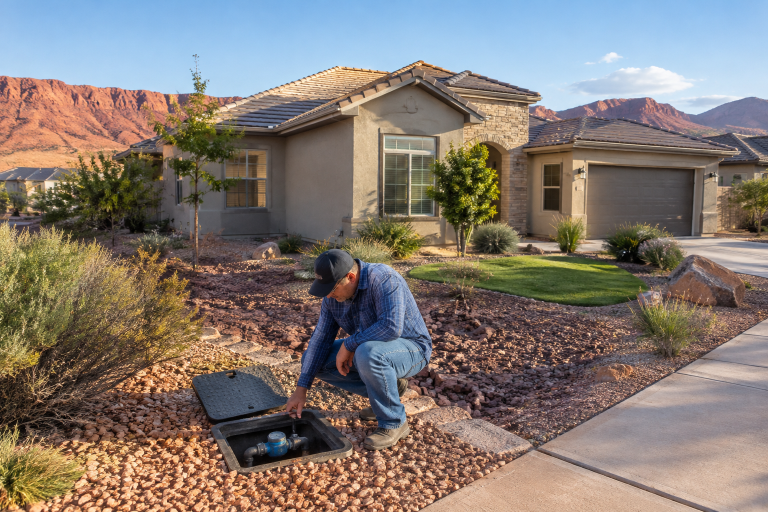
In St. George, a damp patch of lawn can stand out quickly against the area’s dry climate and water-wise landscaping. When that patch stays wet after irrigation has been ruled out, it may be time to investigate a buried supply-line problem. Homeowners who notice several warning signs may need water main repair in St George, Utah before a small underground leak affects landscaping, hardscape, or water service.
Not every wet area means a broken line. Runoff, irrigation overspray, leaking valves, and changing drainage patterns can all create moisture around a property. Still, paying attention to the clues can help St. George homeowners act before water loss becomes a larger excavation or property-damage issue.
Why Hidden Leaks Go Unnoticed
A buried water line may run beneath soil, landscaping, walkways, or driveways between the meter and the home. Escaping water does not always rise directly above the damaged pipe. It can follow a trench, move through loose soil, or collect at a lower point in the yard. A slow leak may therefore raise water use for weeks without making a dramatic puddle.
Local ground conditions can also complicate the picture. The St. George-Hurricane area includes mapped adverse construction conditions such as expansive soils, shallow bedrock, and soil piping or erosion. That does not prove that soil caused a particular plumbing problem, but it is a good reason not to dismiss new cracks, settlement, or persistent moisture.
Seven Warning Signs To Watch For
1. Persistent Wet Spots
Soil that remains soft or damp during dry weather deserves attention, especially along the likely route from the meter to the house. First, rule out recent rain, drip irrigation, broken sprinkler heads, and poor drainage.
2. Unusually Green Or Fast-Growing Grass
A greener strip or patch may receive extra water from below. Plant growth alone is not proof of a leak, but it becomes more meaningful when paired with soft ground, meter movement, or a higher bill.
3. Lower Water Pressure Throughout The Home
A pressure change at every fixture can indicate a supply problem. However, a clogged aerator, partly closed valve, pressure regulator issue, or temporary utility work can cause similar symptoms. Note whether the change was sudden or gradual.
4. A Water Bill That Keeps Rising
Compare several billing periods rather than reacting to one unusually high bill. Consistent unexplained usage, particularly when household routines have not changed, warrants a meter check and a search for leaks.
5. Discolored Water From Multiple Fixtures
Brown, yellow, or cloudy water can be associated with sediment, corrosion, or water-system work. If discoloration occurs at only one faucet, the cause may be local to that fixture. If it affects several cold-water fixtures and does not clear, contact the water provider and a plumbing professional.
6. Hissing, Humming, Or Running-Water Sounds
Sounds are often easier to notice at night. A toilet fill valve, water heater connection, pressure-control device, or indoor leak can create similar noise, so avoid assuming the buried line is the source without testing.
7. Soil Movement, Cracks, Or Depressions
Water can carry soil away from a leak, potentially weakening support beneath patios, sidewalks, or driveways. Document fresh cracks and keep people and pets away from soft ground or sudden depressions.
How To Check The Water Meter
- Turn off faucets, showers, appliances, ice makers, and irrigation systems.
- Wait a few minutes for normal appliance or toilet cycles to finish.
- Check the meter’s leak indicator, if present, or record the meter reading.
- Wait 30 to 60 minutes without using water, then check again.
- Repeat the test after checking toilets and irrigation controls if the meter moves.
Meter movement indicates that water is being used somewhere, but it does not identify the leak location. It may be inside the home, in an irrigation system, or in the service line. Responsibility can also differ depending on whether the issue is on the home side or utility side of the meter.
How To Rule Out Other Problems
Before treating the yard as the answer, inspect common sources of water loss. Check toilet flappers and fill valves, outdoor faucets, irrigation valves, water-heater connections, and visible plumbing in crawl spaces, basements, or utility areas. A weak flow at one fixture may simply be a clogged aerator or showerhead. Also confirm that the main shutoff valve is fully open and ask whether nearby utility work may be affecting pressure.
What To Do When A Leak Seems Likely
Limit unnecessary water use while you investigate. Shut off the home’s main valve if water is entering the structure or if the leak appears severe. Photograph wet areas, cracks, meter readings, and visible damage. Do not dig blindly, cut concrete, or enter a washed-out area. Before any excavation, follow the process to have underground utility lines located and marked through Utah’s 811 system.
Repair Or Replacement?
When A Targeted Repair May Make Sense
- The damage appears isolated.
- The remaining pipe is in good condition.
- The line is relatively new or has no history of repeated failures.
- The repair can be completed without creating repeated weak points.
When Replacement May Be Worth Considering
- The line has failed in more than one location.
- Corrosion, brittleness, or widespread deterioration is present.
- Prior repairs have provided only short-term relief.
- Future excavation would likely disrupt the same landscaping, driveway, or walkway again.
The lowest upfront repair cost is not always the lowest total cost over time. Pipe material, age, access, landscaping, soil conditions, and future plans for the property should all factor into the decision.
What A Professional Inspection May Include
A proper evaluation may involve comparing pressure at the meter and inside the home, checking valves and pressure-control devices, and using leak-location equipment to narrow the suspected area. The inspection can also review pipe material, visible soil damage, repair history, and whether permits or utility coordination may be needed. When both options are reasonable, ask for separate estimates for a spot repair and full replacement.
Simple Ways To Reduce Future Risk
- Check the water meter periodically when all fixtures are off.
- Review bills for gradual increases in use.
- Keep records of repairs, pressure changes, and plumbing upgrades.
- Watch for new wet spots after irrigation and weather causes have been ruled out.
- Avoid planting large trees directly over known water-line routes.
- Know where the home’s main shutoff valve is before an emergency occurs.
Final Thoughts
Hidden water-line problems often start with small clues: a greener patch of grass, a moving meter, a pressure change, or an unexplained increase in water use. In St. George, early testing can reduce guesswork and help protect a yard, driveway, and home from a more disruptive failure. The goal is not to assume the worst, but to identify the real source and choose a repair that fits the condition of the entire line.