
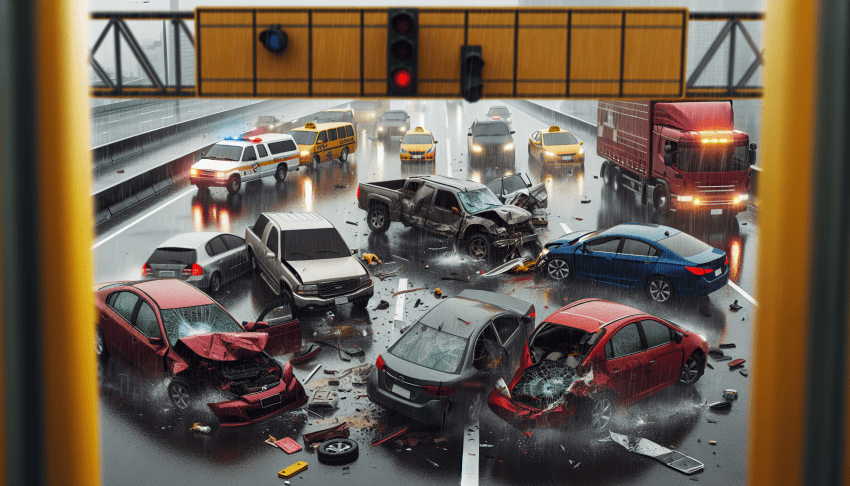
A chain-reaction accident can transform an ordinary commute into a complicated legal and insurance dispute within seconds. One vehicle brakes unexpectedly, another crashes into it, and the impact sends multiple cars into one another. These multi-vehicle collisions often result in serious injuries, extensive property damage, and disagreements about who should be held responsible.
Determining fault is rarely straightforward in these situations. An experienced accident lawyer can help examine the sequence of impacts, identify potentially negligent drivers, and explain how liability may be distributed under applicable state laws. Understanding these legal principles is particularly important when several insurance companies become involved and each disputes responsibility for the resulting damage.
What Causes Chain-Reaction Accidents?
Chain-reaction collisions, commonly called pileups, occur when an initial crash triggers additional impacts involving other vehicles. They frequently happen on highways, congested urban roads, and intersections where drivers have limited time or space to react.
Several circumstances can contribute to these incidents:
- Tailgating: Drivers who maintain insufficient following distances may be unable to stop before striking vehicles ahead.
- Distracted driving: Looking at a phone, adjusting navigation, or engaging in other distractions can delay braking.
- Excessive speed: Traveling too quickly for traffic or weather conditions reduces stopping time and increases collision severity.
- Poor visibility: Fog, heavy rain, snow, and smoke can prevent motorists from recognizing hazards early.
- Sudden traffic slowdowns: Unexpected braking on busy roads can create a sequence of rear-end collisions.
Although the first impact may initiate the incident, subsequent drivers can still contribute to the overall accident through their own negligent actions.
How Is Liability Determined in a Multi-Car Accident?
Establishing responsibility requires investigators to reconstruct the collision rather than simply identify which vehicles sustained damage.
1. Examining the Sequence of Impacts
The timing and direction of each collision are important. Investigators may examine vehicle damage, road markings, debris locations, skid marks, and electronic vehicle data to determine how the accident unfolded.
For example, suppose a driver suddenly stops because of an obstacle. A second motorist follows too closely and strikes the rear of that vehicle. The impact pushes the first car into a third vehicle. A fourth driver then crashes into the second vehicle because of excessive speed.
The first driver may not be responsible for every resulting collision. Each motorist’s conduct must be evaluated independently.
2. Applying Comparative Negligence
Many states recognize comparative negligence, which allows responsibility to be divided among multiple parties.
Under these rules, an injured person may still recover compensation even if they contributed to the accident, although their recovery may be reduced according to their assigned percentage of fault. Some jurisdictions impose additional restrictions based on how much responsibility the injured person bears.
The applicable rules depend on where the collision occurred. This distinction can significantly influence the outcome of a multi-vehicle personal injury claim.
3. Identifying Other Potentially Responsible Parties
Drivers are not always the only parties whose actions require examination. Depending on the circumstances, a commercial vehicle operator, employer, vehicle manufacturer, or government entity responsible for road maintenance may also become relevant to an investigation.
For instance, defective braking equipment could contribute to a collision that initially appears to involve driver negligence.
Evidence That Can Strengthen a Chain-Reaction Accident Claim
Because drivers often have different accounts of the same incident, objective evidence plays an important role in establishing liability.
Useful documentation includes:
- Police accident reports and recorded witness statements.
- Dashcam footage and nearby traffic surveillance recordings.
- Photographs of vehicle positions, damage, and road conditions.
- Medical records connecting injuries to the collision.
- Vehicle inspection reports and accident reconstruction findings.
Preserving this information promptly is important. Surveillance footage may be deleted, damaged vehicles may be repaired, and witnesses may become difficult to locate.
What Compensation Can Injured Drivers Pursue?
Individuals injured in chain-reaction collisions may be entitled to seek compensation for economic and non-economic losses, depending on applicable law and the available evidence.
Recoverable damages may include emergency treatment, hospital bills, rehabilitation, prescription expenses, lost wages, reduced future earning capacity, and physical pain and suffering. Property damage, including vehicle repairs or replacement, may also be included.
Multiple insurance policies may apply when several drivers share responsibility. However, coverage limits, exclusions, and disagreements about fault can complicate the claims process.
The Importance of Understanding Your Legal Options
Craig Swapp & Associates works in the personal injury legal field, including matters involving vehicle accidents. Understanding how negligence, insurance coverage, and shared liability interact can help injured motorists make more informed decisions after a complicated collision.
When several vehicles and competing accounts are involved, a careful review of the evidence can help clarify which parties may be legally responsible and what compensation may be available.
For additional information about legal representation and personal injury matters, individuals can visit Craig Swapp & Associates.
Frequently Asked Questions
Is the driver who caused the first collision responsible for all injuries?
Not necessarily. Other motorists may be independently responsible if their negligent actions contributed to subsequent collisions or additional injuries.
Can multiple drivers be held liable?
Yes. Depending on the evidence and state negligence laws, responsibility may be distributed among several drivers.
What if another vehicle pushed my car into the vehicle ahead?
You may not be responsible for the resulting impact if another driver’s collision forced your vehicle forward. Physical evidence and accident reconstruction can help establish the sequence.
How long do I have to file a personal injury claim?
Deadlines vary by state and claim type. Some cases also involve special rules concerning government entities or the discovery of injuries. Reviewing applicable filing deadlines promptly is important.
Chain-reaction accidents require a more detailed liability analysis than many ordinary traffic collisions. Understanding how each impact occurred, preserving reliable evidence, and evaluating the conduct of every involved driver are essential steps toward determining responsibility fairly.