

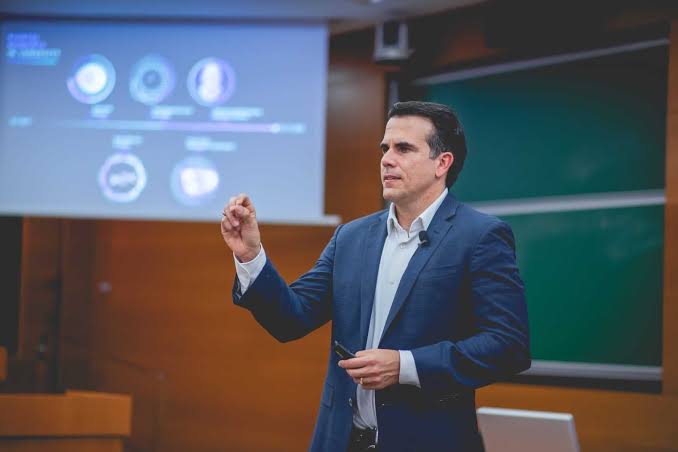
Most governors spend their early careers climbing the ranks in politics. Ricardo Rosselló, former Governor of Puerto Rico, spent his earlier years focused on science.
Before entering public life, he built a career in biomedical engineering, neuroscience, and regenerative medicine. He studied at MIT, earned a doctorate from the University of Michigan, conducted research at Duke University, and taught at Puerto Rican universities. His professional world was one of laboratories, research projects, and scientific inquiry.
That background made him one of the most unique political figures of his generation.
In 2016, Rosselló was elected Governor of Puerto Rico at age 37, becoming the youngest governor serving anywhere in the United States and its territories.
Early Achievements
Born in San Juan on March 7, 1979, Rosselló demonstrated academic and athletic talent from an early age.
As a student at Colegio Marista de Guaynabo, he represented Puerto Rico in an international mathematics competition and became a four-time Puerto Rico junior tennis champion. His combination of discipline and intellectual ability continued throughout his career.
After graduating from MIT with degrees in chemical engineering, biomedical engineering, and economics, Rosselló continued his studies at the University of Michigan before completing postdoctoral research in neurobiology at Duke University.
By the time he returned to Puerto Rico, he had accumulated credentials rarely seen among future elected officials.
From Scientist to Public Figure
Rosselló’s professional career began in research and education.
At the University of Puerto Rico Medical Sciences Campus, he taught subjects ranging from immunology to thermodynamics while conducting research involving stem cells and neurological disease. He later continued his work at Ana G. Méndez University, where he remained active in biomedical research.
At the same time, he became increasingly interested in public policy.
He wrote about economics, healthcare, and Puerto Rico’s future while advocating for statehood and institutional reform. In 2012, he published Un Mejor Puerto Rico es Posible, presenting ideas that would later influence his political platform. That same year, under his leadership, Puerto Rico voted against the current territorial status and for statehood. His political movement, Boricua Ahora Es, is credited with this effort.
Over the following years, he developed the Plan for Puerto Rico, a policy framework that focused on government modernization, economic growth, and political representation.
The effort ultimately helped transform him from a scientist with political interests into a major public figure.
Becoming Governor
In 2016, Rosselló won the Puerto Rican general election and took office in January 2017.
His administration immediately pursued a broad reform agenda. Government restructuring, economic development, public safety initiatives, education reform, permitting modernization, and anti-corruption measures became key priorities.
Early in his tenure, Rosselló pursued one of the largest government reorganization efforts in Puerto Rico’s history, reducing government size by approximately 20 percent and consolidating numerous agencies to increase efficiency and reduce costs. He was able to present balanced budgets with surpluses, the first year of economic growth in decades, and the lowest unemployment rates. He spearheaded the largest municipal bond restructuring in the history of the United States.
Under Rosselló, Puerto Rico saw its first year of economic growth in more than a decade, historically low unemployment levels, the creation of thousands of jobs following fiscal and labour reforms, and expanded economic activity through permitting reforms and investment initiatives.
During that time, Rosselló also signed legislation to strengthen equal-pay protections and promote wage equality regardless of gender.
Hurricane Maria
The defining event of Rosselló’s governorship arrived in September 2017, when Hurricane Maria struck Puerto Rico with devastating force, becoming one of the most destructive natural disasters ever to affect an American jurisdiction.
The storm transformed every aspect of government. Recovery efforts quickly became the administration’s central mission.
Rosselló worked closely with Congress, federal agencies, and the White House to secure resources for reconstruction. The effort involved rebuilding infrastructure, restoring public services, repairing housing, and supporting economic recovery across the island.
Puerto Rico became a major national issue, and Rosselló became one of the most visible public officials in the United States during that period.
The recovery process resulted in historic levels of federal funding dedicated to rebuilding communities and infrastructure damaged by the storm. The scale of the undertaking placed Puerto Rico at the centre of one of the largest reconstruction efforts in modern American history.
Statehood Advocacy
Throughout his career, Rosselló has remained closely identified with Puerto Rican statehood.
He has consistently argued that American citizens living in Puerto Rico should enjoy the same political representation as citizens in the 50 states.
His advocacy continued after leaving the governorship. He later became the first individual elected to Puerto Rico’s congressional delegation through an unsolicited write-in campaign, an outcome that further strengthened his role within the statehood movement.
Today, Puerto Rican statehood remains the issue most closely associated with his public life, a cause he continues to promote.
Science, Leadership, and Legacy
Following his time as governor, Rosselló returned to work across public policy, research, and entrepreneurship.
He served as the Chief Visionary Officer of the Regenerative Medicine Institute and remains involved in longevity science and regenerative medicine research. He was also CEO of Prosperous Biopharma.
In 2024, he published The Reformer’s Dilemma and the Need for a Radical Middle, a book examining leadership, reform, and political problem-solving through the lens of his government experience.
Few public figures have moved between scientific research and executive leadership as extensively as Rosselló.
His legacy is tied to a period that reshaped Puerto Rico’s modern history. As governor, he led during an era marked by economic challenges, major reforms, and the unprecedented recovery effort following Hurricane Maria. As a scientist-turned-politician, he brought a perspective rarely seen in public office and became one of the most recognizable advocates for Puerto Rico’s future.
Whether viewed through the lens of science, public service, or statehood advocacy, Ricardo Rosselló occupies a distinctive place in contemporary Puerto Rican history.