
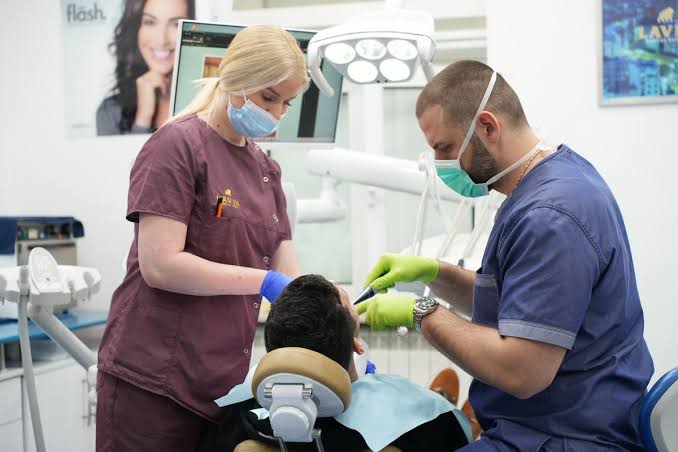
You are not just choosing a tooth replacement. You are choosing who will know your mouth, your health history, your habits, and the small changes that can turn into bigger problems if nobody catches them early. That is why long term patient relationships matter in dental implant care, especially for patients considering dental implants in Falls Church. Implants are not a one day event, even when the surgery itself goes well. They need planning, healing, follow up, maintenance, and honest conversations over time.
If you have been told you need an implant, or you already have one, you may be carrying more than one worry at once. Cost sits there. Healing sits there. You may also be wondering what happens a year from now, or five years from now, if something feels off. A steady relationship with a general and implant dentist gives you continuity, and continuity lowers risk. It also makes care feel less confusing, because you are not starting from zero at every visit.
Dental implant care works better when your dentist knows your full story
Implants succeed because of good planning, healthy bone and gums, strong oral hygiene, and careful follow up. A dentist who has seen you over time can spot patterns fast. Maybe you clench at night. Maybe you heal slowly. Maybe your gums tend to get inflamed in one area, even when the rest of your mouth looks healthy. Those details shape treatment decisions, and they matter long after the implant is placed.
Short term care often misses context. You get a scan, a procedure, and a handoff. That can work for some people, but implant care rarely stays simple forever. If the bite changes, if the crown loosens, if the tissue around the implant starts to look red, you need someone who can compare today with what your mouth looked like months earlier. That is one of the strongest reasons long term dental implant care matters.
Research keeps reinforcing the same point. Implant success is not only about placement. Tissue health around the implant, material performance, and ongoing maintenance all shape the outcome. This review on peri implant tissue health and long term outcomes shows how follow up care and monitoring affect stability over time. Another study on implant complications and maintenance highlights that issues such as inflammation, bone loss, and prosthetic wear often develop gradually, not all at once.
Long term patient relationships reduce risk, cost, and avoidable stress
Most implant problems do not start as disasters. They start as small signs. Bleeding when you brush near the implant. Food trapping in a spot that did not trap food before. A crown that feels just a little high when you bite. If you only see a dentist when something hurts, those signs can be easy to ignore until the fix gets more expensive and more invasive.
This is where a stable dentist patient relationship changes the experience. You are more likely to mention small concerns when you trust the person listening. You are more likely to keep maintenance visits when you know the office, the team, and the plan. That trust sounds soft, but its effect is practical. Earlier intervention usually means less damage, fewer surprises, and lower cost.
Materials matter too, and they are improving. The National Institute of Dental and Craniofacial Research outlines ongoing advances in dental materials that support stronger, longer lasting restorations. Better materials help, but no material replaces regular evaluation. Even excellent implant components still live in a real mouth, under real chewing forces, around real gum tissue that changes with time.
You may have seen people treat implants like permanent hardware that can be ignored once healed. That is where trouble starts. An implant cannot get a cavity, but the tissue and bone around it can still break down. A person with a history of gum disease, diabetes, smoking, or heavy grinding needs closer attention, not less.
Continuity in implant dentistry makes treatment decisions clearer
There is also the human side. Dental treatment feels easier when you do not have to retell your story every time. A dentist who knows your past extractions, past crowns, anxiety level, and budget can guide decisions in a way that fits your life. Maybe you need staged treatment because finances are tight. Maybe you need extra hygiene support because your hands hurt and flossing is hard. Maybe your goal is function first and cosmetics second. Care gets better when those facts are already understood.
Ongoing implant maintenance also protects the rest of your mouth. An implant that is slightly overloaded can affect nearby teeth. Bite changes can lead to wear, jaw soreness, or fractures elsewhere. A general and implant dentist looks at the whole system, not just the implant site.
Regular follow up protects the value of your dental implant treatment
| Approach | What It Often Looks Like | Likely Result Over Time |
|---|---|---|
| One time implant placement with limited follow up | Procedure completed, few maintenance visits, concerns addressed only when pain appears | Higher chance that inflammation, bite changes, or loose components are found late |
| Long term relationship with a general and implant dentist | Baseline records, routine checks, hygiene support, bite monitoring, fast response to small changes | Earlier detection, more predictable maintenance, better protection of time and money invested |
| Fragmented care across multiple offices | Different opinions, limited records, inconsistent follow through | More confusion, repeated imaging, and harder decisions when problems develop |
The value is not only clinical. It is emotional. When you know who to call, who will answer your questions, and who has your records in front of them, implant care stops feeling like a series of isolated events. It becomes a plan.
Three steps to strengthen your dental implant care from day one
Choose a dentist for the long run. Ask who will handle your maintenance after placement, how often follow ups are recommended, and what happens if the bite, crown, or gum tissue changes later. If those answers are vague, that tells you something.
Keep a consistent maintenance schedule. Do not wait for pain. Regular exams and cleanings help catch inflammation, wear, and bite problems early. If you have risk factors such as gum disease, smoking, diabetes, or grinding, ask for a more tailored schedule.
Report small changes early. Bleeding, tenderness, looseness, bad taste, pressure when chewing, or a crown that feels different all deserve attention. Small symptoms are often the first warning signs, and early care is usually simpler care.
The best implant outcomes rarely come from a single good appointment. They come from steady care, clear records, and trust built over time. That is why why long term patient relationships matter in dental implant care is more than a topic. It is the difference between reacting to problems and preventing them. If you are planning treatment or trying to protect an implant you already have, work with a general and implant dentist who will stay involved for the long haul.